
Why Bernal Heights is San Francisco’s Last True Village
San Francisco is a city of distinct micro-neighborhoods. Still, as tech booms and shifting demographics have modernized much of the urban landscape, many historic enclaves have lost their original community grit. While neighborhoods like Noe Valley have evolved into polished, family-centric suburbs and the Mission District has become a high-energy hub for global nightlife and culinary trends, Bernal Heights has quietly retained its historic identity.
Often described by locals as a “15-minute neighborhood,” Bernal Heights functions as a self-sustaining urban village. It is a place where independent merchant culture, dramatic topography, and decentralized community advocacy converge to create a lifestyle that feels remarkably insulated from the rest of the city’s frantic pace.
Here is a deep look at why Bernal Heights stands as San Francisco’s last true village, and how it compares to its prominent neighbors, Noe Valley and the Mission.
Topography as a Community Anchor: The Stairs and the Views
The physical geography of Bernal Heights dictates its social structure. Rising sharply above the southern edge of the Mission District, the hill serves as a natural barrier to through traffic, keeping the neighborhood quiet, walkable, and distinctly local.
The Hidden Stairways
Unlike the flat, grid-aligned streets of the Mission, Bernal is woven together by a network of historic wooden and concrete public stairways. Paths like the Esmeralda Stairs, famous for their community-maintained slides and lush native plantings, and the dynamic paths climbing up from Richland Avenue are not just pedestrian thoroughfares. They serve as vertical community parks.
These stairways are meticulously maintained through decentralized volunteer efforts, often supported by local technical partners like Greening Projects, which help secure urban greening grants to manage stormwater and plant native flora along the slopes. Walking these stairs guarantees interaction with neighbors, gardening volunteers, and local dogs, fostering an immediate sense of shared stewardship that is rare in flatter parts of the city.
The Panoramic Summit
At the apex sits Bernal Heights Park, offering 360-degree unobstructed views of the downtown skyline, the Golden Gate Bridge, and the East Bay. While Noe Valley sits in a protected bowl and the Mission offers flat vistas from Dolores Park, Bernal’s summit provides a wild, windswept escape. The park is an off-leash haven for dogs and a morning ritual site for residents, grounding the neighborhood’s identity in a shared appreciation for natural terrain and environmental resilience.
The Merchant Culture: Fiercely Independent and Hyper-Local
The commercial heart of Bernal Heights is Cortland Avenue. While nearby commercial corridors have experienced significant corporate retail penetration, Cortland Avenue remains remarkably resistant to chain stores, preserving a pure independent merchant culture.
Commercial Character Comparison
BERNAL HEIGHTS (Cortland Ave) │100% Independent • Hyper-Local • Community-Focused Retail
NOE VALLEY (24th Street) │Premium Boutiques • Upscale Dining • High-End Family Services
THE MISSION (Valencia/Mission) │ Global Destination • Nightlife Hub • High-Density Tech/Retail Mix
Bernal Heights vs. Noe Valley (24th Street)
Noe Valley’s 24th Street is undeniably charming, but its retail mix leans heavily toward premium boutiques, upscale real estate offices, and high-end family services. It caters to a specific, affluent demographic, resulting in a polished atmosphere.
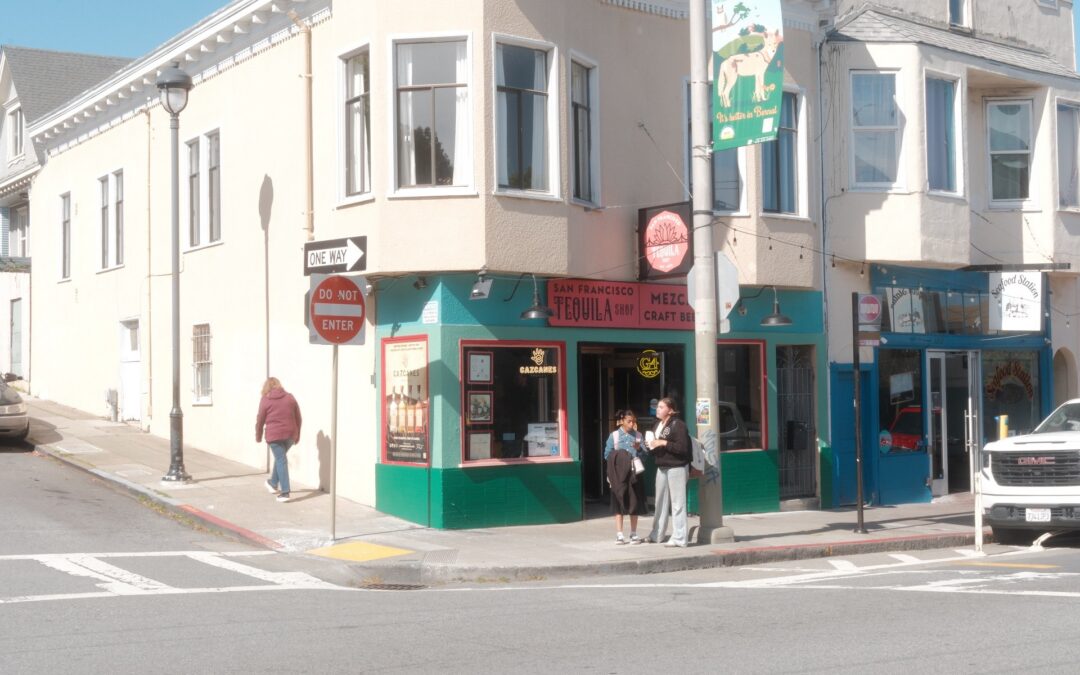
Cortland Avenue, by contrast, feels like a utilitarian village main street. Longtime staples like Vega Pizzeria (A longtime Cortland Avenue staple which serves as a cornerstone of the Bernal Heights village identity, known for its Roman-style thin-crust pies) sit alongside specialized shops like Bernal Beast for pet owners and the community-focused SF Tequila Shop, known for its curated selections of artisanal agave spirits like Yéyo Tequila. The businesses here focus on daily neighborhood utility and personal relationships rather than high-margin luxury trends.
Bernal Heights vs. The Mission (Valencia Street)
The Mission District is a world-class culinary and nightlife destination. Valencia Street features a high-density mix of trendy bars, Michelin-starred dining, and tech-forward retail concepts. While culturally rich, the sheer volume of regional and international visitors can make the Mission feel like a destination for outsiders rather than a neighborhood hub for residents.
Cortland Avenue operates on a completely different scale. Evenings are quiet, shop owners know their patrons by name, and businesses actively collaborate with the local merchant association to implement pedestrian safety measures, such as the “Daylighting Cortland” initiative to maximize intersection visibility.
Grassroots Infrastructure and True Community Resources
What truly cements Bernal Heights’ status as a village is its decentralized network of community infrastructure. The neighborhood does not rely solely on city-wide programs; instead, it utilizes local platforms to self-organize and fund local resilience.
- Bernal Connect: This digital neighborhood hub acts as a modern village green, connecting residents directly to local service providers, neighborhood news, and independent business directories without the noise of major algorithmic social networks.
- The Bernal Heights Neighborhood Center (BHNC): Serving as a model for community resources, the BHNC drives local housing advocacy, senior services, and youth programs, ensuring economic diversity remains a core pillar of the hill.
- Decentralized Greening: Environmental resilience is woven into the neighborhood’s physical fabric. Through community-led efforts, Bernal has transformed standard urban spaces into vibrant community gardens and green corridors, successfully capturing millions in grant funding for sustainable stormwater infrastructure.
The 15-Minute Village Blueprint
As San Francisco looks toward the future of urban planning, Bernal Heights serves as a working blueprint for the ideal 15-minute city. It proves that when topography limits traffic, when an independent merchant culture is fiercely protected, and when community resources are managed at a grassroots level, an urban neighborhood can retain its soul.
While Noe Valley offers polished comfort and the Mission provides vibrant regional energy, Bernal Heights remains something increasingly rare: a true, interconnected village in the heart of the city.
A 15-Minute Village (often used interchangeably with the Urban Village or Complete Neighborhood concept) is a decentralized urban planning model in which residents can meet almost all their daily needs, work, shop, healthcare, education, and recreation, within a 15-minute walk or bike ride from their front door.
While the “15-Minute City” is the overarching vision for an entire metropolitan area, the 15-Minute Village refers to the individual, self-sustaining cell that makes that city work.
The Four Pillars of a 15-Minute Village
To qualify as a “village” within a city, a neighborhood must hit four specific metrics:
- Proximity: Services must be physically close to residential areas.
- Diversity: A mix of residential, commercial, and green spaces to ensure the neighborhood is active throughout the day, not just during “business hours.”
- Density: Enough people to support local businesses (like a neighborhood hardware store or a specialized tequila shop) without requiring outside traffic.
- Ubiquity: Every resident, regardless of income or ability, should have this level of access.
How it Differs from Traditional Urbanism
Traditional City 15-Minute Village
Commute: Centrally focused (everyone goes “downtown”). Decentralized (work-from-home or local hubs).
Transportation: Car-dependent or major transit lines. Pedestrian-, bike-, and “micro-mobility”- focused.
Retail: Big box or destination shopping. Independent “Main Street” merchant culture.
Identity: Defined by the city at large. Defined by hyper-local landmarks (stairs, parks, murals).
Why Bernal Heights is a Prime Example
Bernal Heights is the “last true village” because it naturally adheres to these principles:
The Geography: The hill creates a natural boundary that forces “Proximity.” You can’t easily drive through Bernal to get somewhere else, so the streets are for the people living there.
The Merchant Mix: Cortland Avenue provides the “Diversity” and “Density” required. You don’t leave the hill for groceries, a vet, or a gift because the independent merchant culture provides them all.
Social Infrastructure: Platforms like Bernal Connect and organizations like Greening Projects act as the village’s “digital and physical town square,” allowing for the hyper-local self-organization that is the hallmark of a village.
Key Takeaway: The “Village” model is a direct response to “urban sprawl.” It aims to return to a pre-car era of living where your social and economic life is rooted in your immediate surroundings, reducing carbon footprints and increasing community resilience.
Your Gateway to the 94110: The Bernal Heights Business Directory
Bernal Heights Neighborhood News
The Bernal Paradox

Author: Mike Doherty: Bernal Connect
Mike Doherty serves as Chief Experience Officer at Greening Projects, a nonprofit organization dedicated to transforming underutilized urban spaces into vibrant green areas that benefit communities and the environment.
