
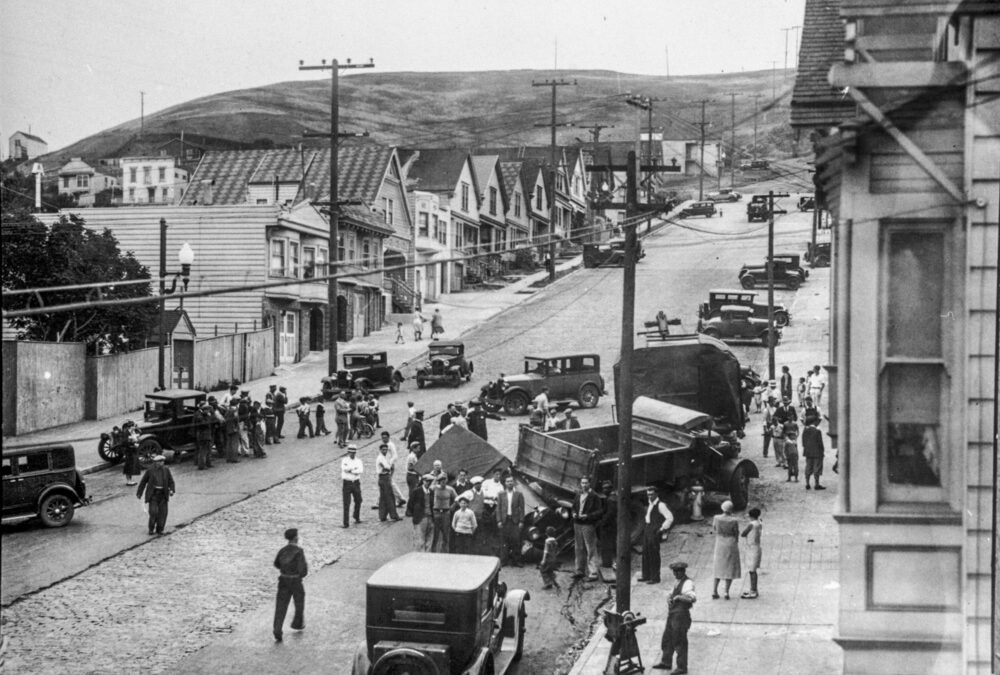
Bernal Heights: The Evolution of San Francisco’s “Village on the Hill”
The Hill That Stayed: The Evolution of Bernal Heights
For over two centuries, the jagged silhouette of Bernal Hill has served as a silent witness to San Francisco’s transformation. Long before the modern boutiques of Cortland Avenue appeared, the land was defined by its resilience and its literal foundation. Unlike the soft, shifting soils of the city’s lower districts, Bernal’s bedrock offered a rare stability that would eventually save its residents and define its future.
The Pastoral Beginning
The story began in 1839, when the Mexican government granted over 4,400 acres to José Cornelio Bernal. Known then as Rancho Rincon de las Salinas y Potrero Viejo, the territory was a sprawling expanse of wild grasses and grazing livestock. It was a rugged, rural frontier far removed from the growing maritime hub of Yerba Buena. Even after the land was subdivided in the 1860s, it retained a lawless, independent spirit. For a brief moment during this era, the hill was even the site of a frantic mini-gold rush, though the “precious finds” turned out to be little more than a clever hoax.
The Bedrock Refuge
The true turning point for the neighborhood arrived in 1906. As the Great Earthquake leveled the downtown core and fires swept through the wooden tenements of the flatlands, thousands of displaced families fled south. They sought the safety of Bernal’s solid ground. Because the hill’s chert and sandstone foundation resisted the tremors that liquified other parts of the city, the neighborhood became a literal sanctuary. Small “earthquake shacks” soon dotted the slopes, marking the transition from a remote ranch to a dense, working-class community of Irish, Italian, and German immigrants.
The Radical Village
By the middle of the 20th century, the neighborhood’s identity shifted again. Following the industrial boom of World War II, Bernal Heights evolved into a haven for counterculture and activism. During the 1960s and 70s, it earned the nickname “Red Hill” due to the high concentration of political radicals, artists, and organizers who lived there. It was a place where community gardens and grassroots movements took precedence over commercial development, cementing the “village” feel that still characterizes the area today.
The Modern Ascent
The final chapter of Bernal’s evolution began in the late 1990s and has accelerated through the modern tech boom. The once-affordable cottages that housed refugees and radicals are now among the most sought-after real estate in Northern California. As the city’s economic center shifted toward Silicon Valley and high-growth technology, the neighborhood’s charm and proximity to transit corridors made it a primary target for a new professional class.
Today, the median household income in the area has climbed significantly, often exceeding the city’s historic averages by more than double. While the faces on the sidewalk have changed, the geography remains the same. The hill continues to offer a sense of separation from the frantic pace of the Financial District, proving that even as it evolves into an affluent enclave, it remains San Francisco’s most enduring “village on the hill.”
As the hill continues to evolve, the spirit of that original village remains, a sentiment captured today by the local businesses and neighbors that keep this unique community connected.
The Best Local Businesses in Bernal Heights

Author: Mike Doherty: Bernal Connect
Mike Doherty serves as Chief Experience Officer at Greening Projects, a nonprofit organization dedicated to transforming underutilized urban spaces into vibrant green areas that benefit communities and the environment.

